
Telescopes for Kids: Simple Scopes That Won't Frustrate Them
EyepieceLab is reader-supported. If you buy through our links we may earn a commission at no extra cost to you. As an Amazon Associate we earn from qualifying purchases. Disclosure.
The best kids' telescope is the one that gets the Moon into the eyepiece before they lose interest. That means light, simple and stable. Here are options by listing and maker specs. We haven't tested them.
Teach this first
Small and simple: Travel Scope 70
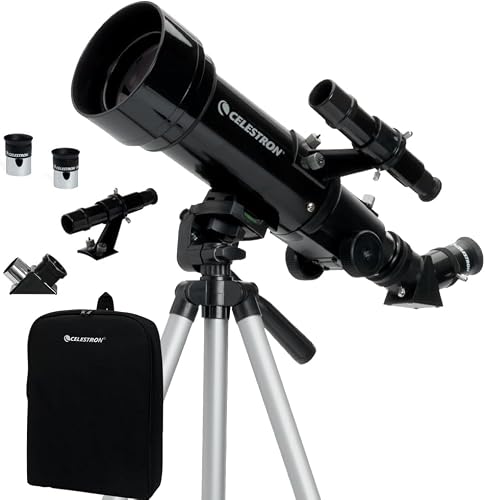
A 70 mm refractor with a 3.3 pound kit weight, per Celestron, that packs into the included backpack. Good for the Moon, bright planets and daytime scenery.
Celestron Travel Scope 70
- 70 mm refractor with fully coated lenses, per the listing
- 20 mm and 10 mm eyepieces; finderscope and star diagonal
- Packs into the included backpack
No assembly: tabletop Dobsonians
The Heritage 130 arrives fully assembled, per the listing, and sits on a table, so a kid can push it around without a wobbly tripod. Celestron's StarSense tabletop adds phone guidance.
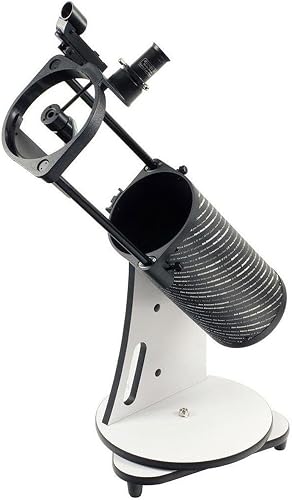
Sky-Watcher Heritage 130mm Tabletop Dobsonian
- 130 mm collapsible tabletop Dobsonian, per the listing
- Arrives fully assembled
- 10 mm and 25 mm eyepieces; starpointer finder
- 2-year warranty
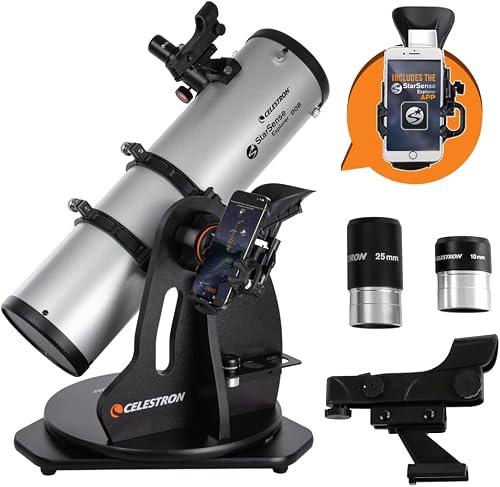
Celestron StarSense Explorer 130mm Tabletop
- 130 mm (5 in.) Newtonian reflector, per the listing
- Tabletop Dobsonian-style base
- Phone dock + StarSense app
For app-loving kids: StarSense Explorer LT 114AZ
Dock a phone and the app shows arrows to the target, per the listing. Celestron lists the full kit at 10.4 pounds.
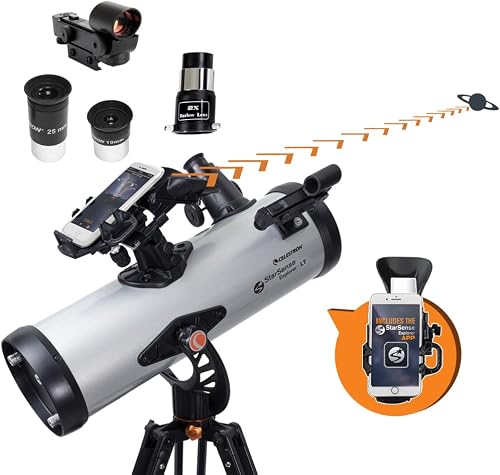
Celestron StarSense Explorer LT 114AZ
- 114 mm (4.5 in.) Newtonian reflector, per the listing
- Phone dock + StarSense app sky recognition
- Manual alt-azimuth mount with altitude slow-motion rod
- 2-year US warranty
For younger kids: a NASA-branded lunar scope
Blue Marble's NASA Lunar Telescope is listed for ages 8 to 12, with a finder scope, two eyepieces and a tabletop tripod. It's built around Moon viewing.
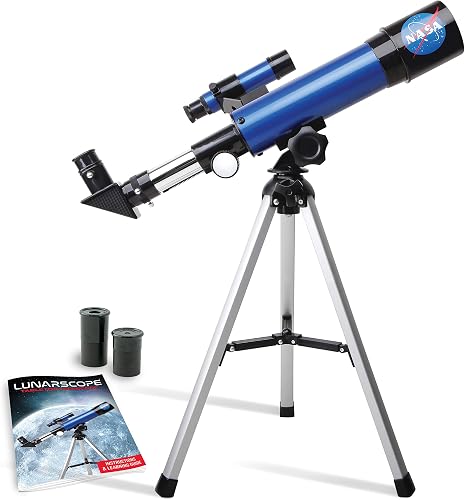
NASA Lunar Telescope for Kids (Blue Marble)
- Listed for ages 8-12
- Finder scope plus low- and high-power eyepieces
- Tabletop tripod
- Amazon exclusive from Blue Marble
Or start with binoculars
NASA's Night Sky Network calls binoculars "an excellent first instrument." A 7x50 or 10x50 pair shows the Moon's craters and star clusters. See binoculars for astronomy.
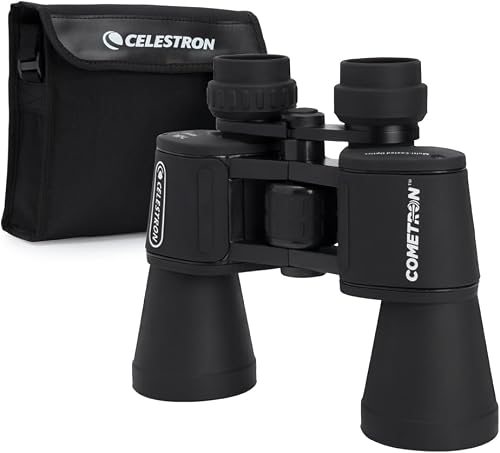
Celestron Cometron 7x50 Binoculars
- 7x magnification, 50 mm objectives, per the listing
- 6.6° field of view
- Tripod-adaptable (adapter not included)
Make the first night work
- Start with the Moon. It's bright and easy to find.
- Use the low-power (longer focal length) eyepiece first; it's easier to aim.
- A red flashlight helps everyone keep their night vision. See astronomy accessories.
Then check what you can see with a telescope for the next targets.
FAQ
Good first telescope for a child?
Light and quick to set up, like a Travel Scope 70 or tabletop Dob.
Daytime use?
Only supervised, and never near the Sun.
What to see first?
The Moon.