
Astronomy Accessories That Make the First Nights Easier
EyepieceLab is reader-supported. If you buy through our links we may earn a commission at no extra cost to you. As an Amazon Associate we earn from qualifying purchases. Disclosure.
None of these show you more on their own, but they make a night at the eyepiece smoother. We haven't tested them.
Red flashlights and headlamps
A National Park Service article explains why: night vision depends on rhodopsin, which "takes from 20 to 40 minutes" to build up, and "it only takes a few seconds of bright light" to undo it. Deep red light doesn't trigger that reset, so "a dim red light is best." It also notes that white flashlights and phone screens are discouraged at star parties.
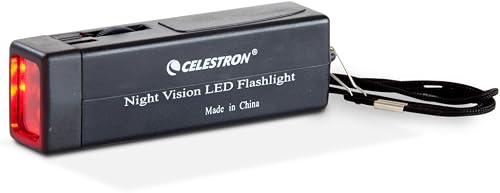
Celestron Night Vision Red LED Flashlight
- Two red LEDs, per the listing
- Thumbwheel brightness control
- Runs on an included 9V battery
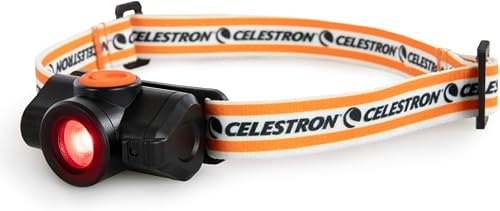
Celestron Night Vision Red LED Headlamp
- Red-only LED headlamp, per the listing
- High/low, blink and SOS modes; 45° tilt
- Up to 100 h on AAA batteries (not included)
Red dot finders
The StarPointer projects an adjustable red dot, keeps the view right-side up, and includes its mounting base and battery, per the listing. Rigel's QuikFinder projects 1/2° and 2° circles and comes with two baseplates for two scopes.
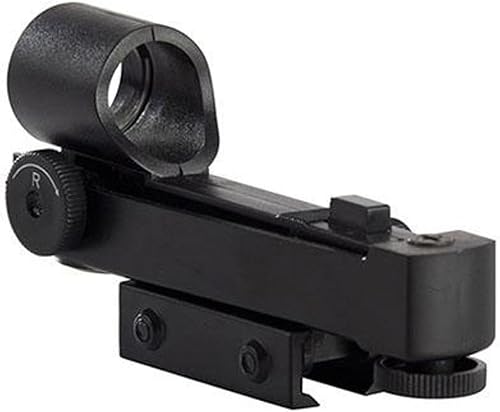
Celestron StarPointer Red Dot Finder
- Red dot 'point and look' finder, per the listing
- Right-side-up view; adjustable dot brightness
- Mounting base and CR2032 battery included
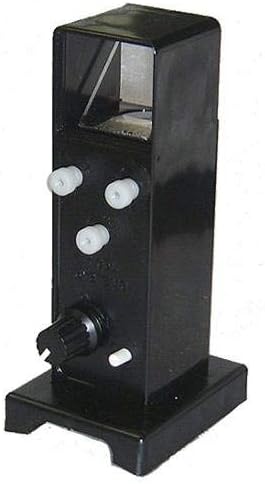
Rigel QuikFinder Reflex Sight
- Projects 1/2° and 2° red circles on the sky, per the listing
- Pulsed or continuous illumination
- Two baseplates included
Star charts
A planisphere is a rotating star wheel: set the date and time and it shows what's up, per the description. Buy the one for your latitude; these are for 40 to 50° north. For deeper reading, Terence Dickinson's books are long-running field guides.
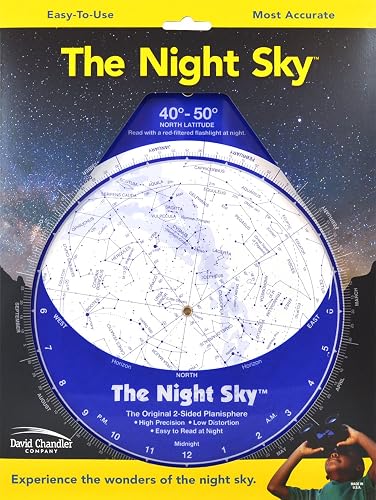
The Night Sky 40°-50° Star Finder (Small)
- Rotating planisphere by David Chandler, per the description
- Shows visible constellations for any date and time
- For 40-50° north latitude
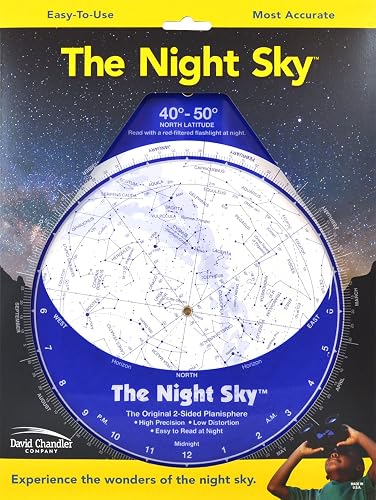
The Night Sky 40°-50° Star Finder (Large)
- Larger two-sided planisphere, per the description
- For 40-50° north latitude
NightWatch: A Practical Guide to Viewing the Universe
- Terence Dickinson's stargazing guide, updated edition, per the description
The Backyard Astronomer's Guide
- Dickinson and Dyer field guide, fourth edition, per the description
Phone adapters
Celestron's NexYZ uses X, Y and Z knobs to center your phone's camera over the eyepiece and fits eyepieces 35 to 60 mm across, per the listing. The NexGo DX kit adds a Bluetooth shutter remote and a Moon filter.
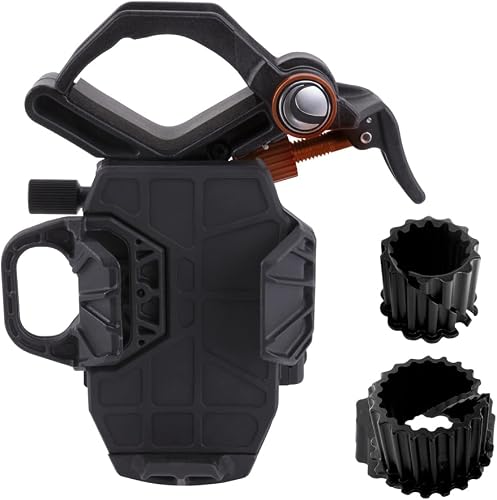
Celestron NexYZ 3-Axis Phone Adapter
- X, Y and Z adjustment knobs to center the phone camera, per the listing
- Fits eyepieces 35-60 mm in diameter
- Fits most phones, even with cases
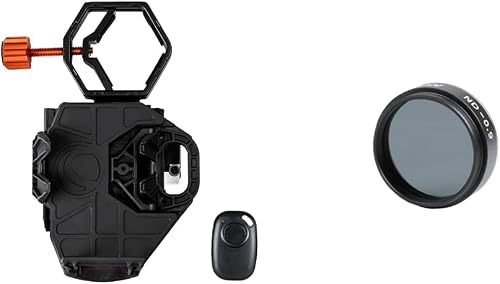
Celestron NexGo DX Kit (Phone Adapter + Moon Filter)
- Phone adapter for eyepieces 25.4-44.45 mm across, per the listing
- Bluetooth shutter remote
- 13% transmission Moon filter
Collimation tools (reflectors)
Celestron says Newtonian reflectors can be optimized by re-collimating as needed, starting with a collimating tool. A Cheshire eyepiece needs no batteries; a laser collimator gives a bright dot to align to. See how to collimate a telescope.
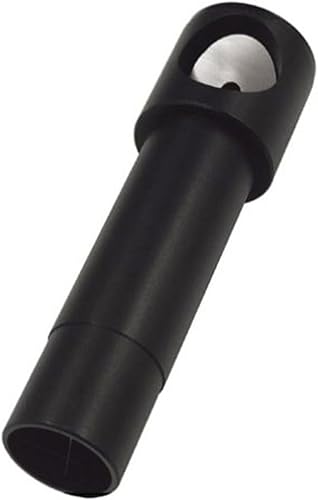
Celestron Cheshire Collimation Eyepiece
- 1.25 in. Cheshire collimating eyepiece, per the listing
- For collimating Newtonians
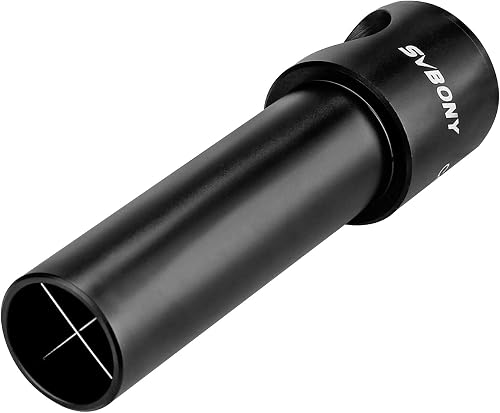
SVBONY SV197 Cheshire Collimating Eyepiece
- 1.25 in. Cheshire with crosshairs and sighting hole, per the listing
- No batteries; daytime use
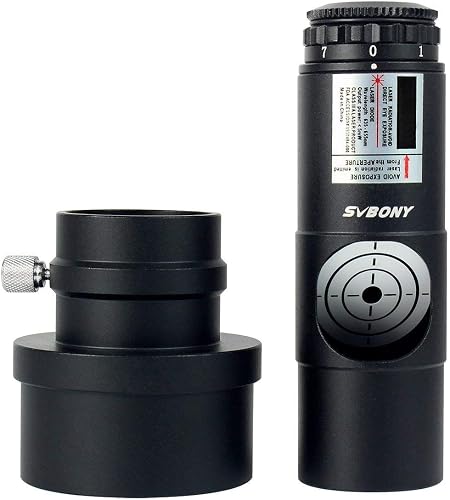
SVBONY Laser Collimator
- For 1.25 in. and 2 in. Newtonian focusers, per the listing
- 7 brightness levels
- Metal body; 2 in. adapter included
Power for GoTo scopes
The PowerTank Lithium has a 12V output for Celestron computerized telescopes, two USB ports and a red/white light; the original PowerTank is an 84 Wh sealed lead-acid pack, per the listings.
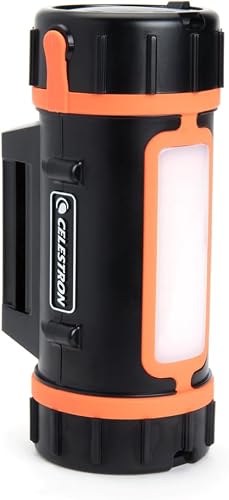
Celestron PowerTank Lithium
- 12V output for Celestron computerized telescopes, per the listing
- LiFePO4 chemistry; rated for up to 2,000 charge cycles
- Two USB ports; red/white LED flashlight
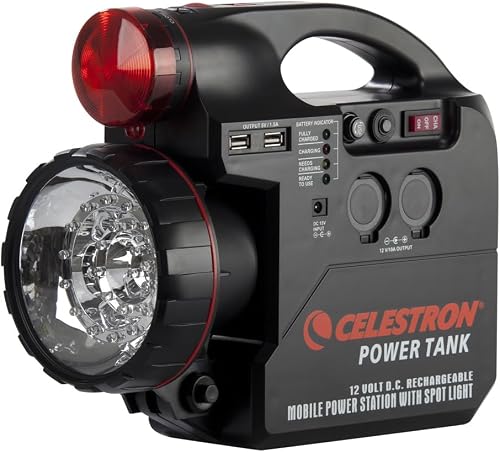
Celestron PowerTank 12V (84 Wh)
- 7 Ah sealed lead-acid, 84 Wh, per the listing
- Two 12V ports, two USB ports
- Red and white LED flashlights; AC adapter included
One more free accessory: a local club
NASA's Night Sky Network lists astronomy clubs that host public viewing nights. It's a good way to look through different scopes before you buy more gear.
FAQ
Why red flashlights?
Red light doesn't reset your night vision.
What's a planisphere?
A rotating star wheel for your latitude.
What's a red dot finder?
A point-and-look aiming sight.