Pictures of the sky: three routes and how to pick one
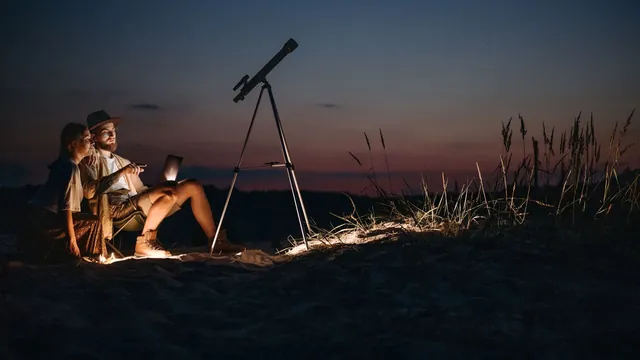
Start with how you want to experience the sky. If you want to look through an eyepiece in real time, you want a traditional telescope: see the telescope guides and what you can see. If you want images building up on a phone or tablet, there are three ways to get there, and the right one depends on what you already own and what you want pictures of.
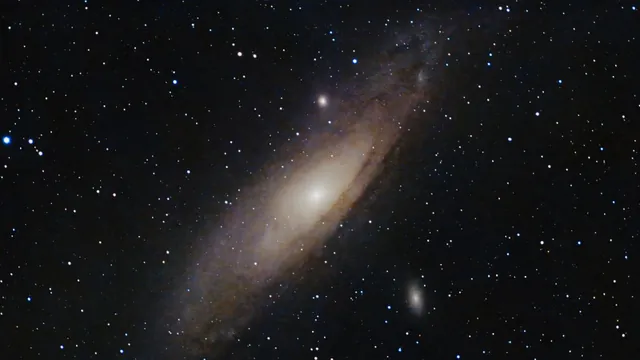
Route one: an all-in-one scope that does everything. ZWO, DWARFLAB and Unistellar sell small telescopes with a built-in camera and a motorized mount that point, track and stack from your phone. Smart telescopes compared lines them up from the makers' spec pages, limits included. The two dual-camera models most people cross-shop get their own page, Seestar S30 vs DWARF 3, and ZWO's newer version is in Seestar S30 Pro. These suit galaxies, nebulae and clusters; ZWO itself says the Seestar S50 "may not meet the requirements for serious astrophotography."
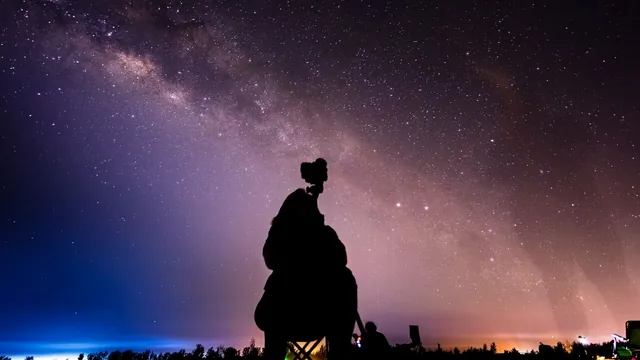
Route two: your own camera on a tracker. If you already own a camera and lenses, a star tracker turns them at the sidereal rate so a 20 mm lens can expose for minutes instead of the 25 seconds the rule of 500 allows untracked. Star trackers compares the iOptron SkyGuider Pro and Sky-Watcher's Star Adventurer 2i and GTi by payload, weight and power, with the untracked exposure table.
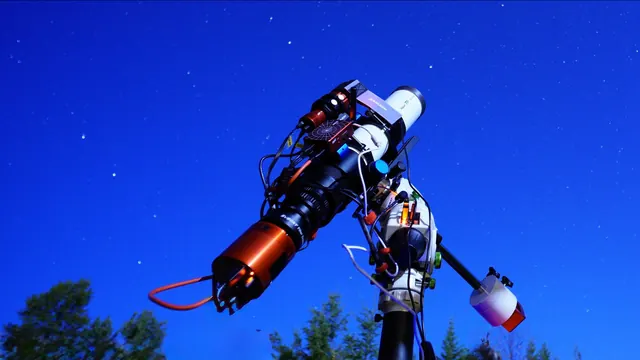
Route three: a camera in your telescope. For the Moon and planets, a small planetary camera replaces the eyepiece and records video for stacking. Astrophotography cameras compares Celestron, SVBONY and ZWO models from their listings.
Whichever route you take, one rule holds: never point any of it at the Sun without the maker's front-mounted solar filter fitted, per NASA and the AAS. The Seestar and DWARF ship with one; a tracker-mounted camera needs its own. See solar filter safety. Specs come from ZWO, DWARFLAB, Unistellar, iOptron and Sky-Watcher, and the product cards from the Amazon listings.