
Celestron AstroMaster 130EQ vs PowerSeeker 127EQ
EyepieceLab is reader-supported. If you buy through our links we may earn a commission at no extra cost to you. As an Amazon Associate we earn from qualifying purchases. Disclosure.
Both are Celestron equatorial reflectors aimed at beginners: Newtonian reflectors with spherical mirrors on equatorial mounts. Specs are from Celestron's product pages. We haven't tested them.
Side by side
| AstroMaster 130EQ | PowerSeeker 127EQ | |
|---|---|---|
| Aperture | 130 mm | 127 mm |
| Focal length / ratio | 650 mm, f/5 | 1000 mm, f/7.87 |
| Primary mirror | Spherical | Spherical |
| Eyepieces | 20 mm erect-image (33x), 10 mm (65x) | 20 mm erect-image (50x), 4 mm (250x) |
| Barlow | Not included | 3x |
| Highest / lowest useful mag. | 307x / 19x | 300x / 18x |
| Mount | CG-3 equatorial | Manual German equatorial |
| Total kit weight | 17 lb | 13 lb |
The magnification trap
Celestron's own guide says that past a scope's highest useful magnification, "the image will be magnified but will not carry or enhance any more details." For the 127EQ, 1000 mm divided by 4 mm is 250x; add the 3x Barlow and you get 750x, against Celestron's stated 300x ceiling. You don't have to use that combination, but don't expect it to show more. See magnification explained.
Which suits whom
- AstroMaster 130EQ: wider low-power views (a 20 mm gives 33x) make finding things easier, and its numbers are the worked example in Celestron's eyepiece guide.
- PowerSeeker 127EQ: lighter, and the longer focal length gives more magnification per eyepiece for the Moon and planets.
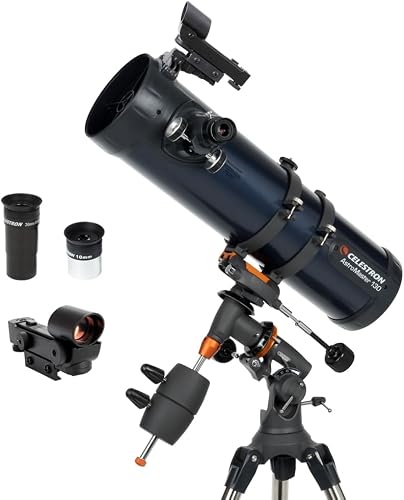
Celestron AstroMaster 130EQ
- 130 mm (5 in.) Newtonian reflector, per the listing
- Equatorial mount with slow-motion controls for RA and declination
- 20 mm (erect image) and 10 mm eyepieces; StarPointer red dot finder
- No tools needed to set up
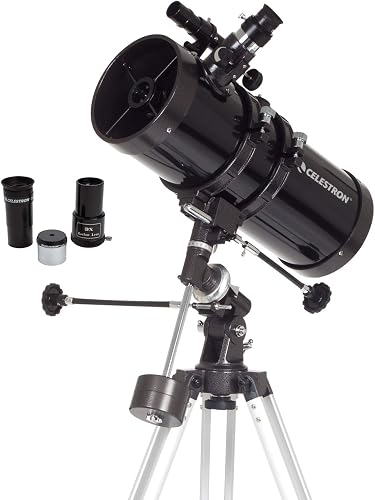
Celestron PowerSeeker 127EQ
- 127 mm Newtonian reflector, per the listing
- Manual German equatorial mount
- 20 mm and 4 mm eyepieces plus a 3x Barlow lens
Worth adding
Either benefits from a better mid-power eyepiece and a Moon filter. Celestron also lists an EclipSmart front solar filter for 127 and 130 mm reflectors, including the 127EQ.
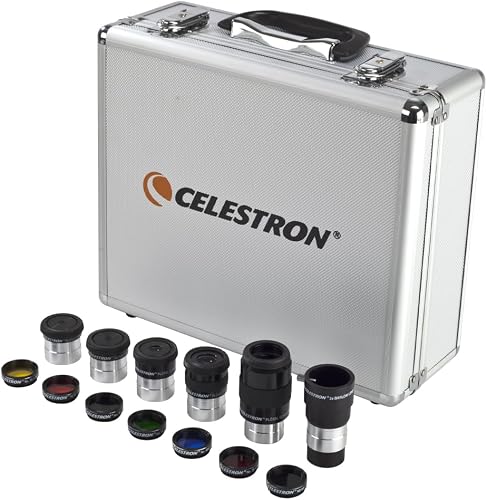
Celestron Eyepiece, Barlow & Filter Kit (1.25 in.)
- 5 Plossl eyepieces: 32, 17, 13, 8 and 6 mm, per the listing
- 2x Barlow lens
- Moon filter plus colored planetary filters
- Foam-lined hard case
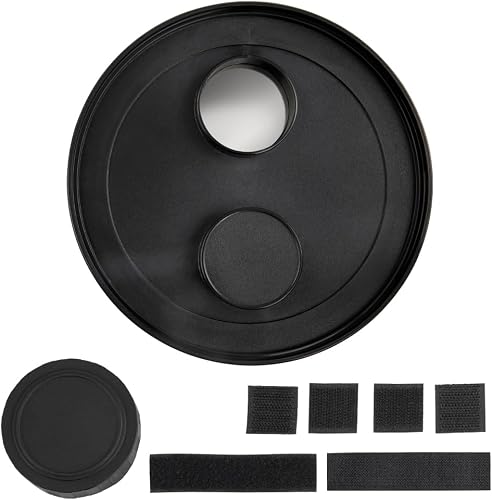
Celestron EclipSmart Solar Filter for 127/130mm Reflectors
- Listed for the PowerSeeker 127EQ, NexStar 130SLT and other 127/130 mm Celestron scopes
- Two hook-and-loop straps; safety cap
Before any solar viewing, read the NASA and AAS rules in our solar filter guide, and cap the finder.
Other options: beginner telescopes and StarSense DX 130AZ vs LT 114AZ.
FAQ
Main difference?
Focal length (650 vs 1000 mm) and accessories.
127EQ max useful magnification?
300x, per Celestron.
Which is lighter?
The 127EQ, 13 vs 17 lb.